Memories as Cuisine, Memories as Tools.
Part.2
What MOZAMBIQUE values is not mere convenience, but tools that accumulate memories with each use — objects you want to keep close for years to come. The chef we visited today translates everything into his cooking: the nature of the Fuji foothills, memories from childhood, the land where he and his brother grew up, the meals their mother made for them. This way of thinking — weaving personal memory into a course meal — resonates deeply with the idea of crafting tools whose value deepens through experience. We asked him to cook with STEKA, and spoke with him about what matters when he conceives a dish, what it means to cook in this place, and where he sees the potential of this tool.
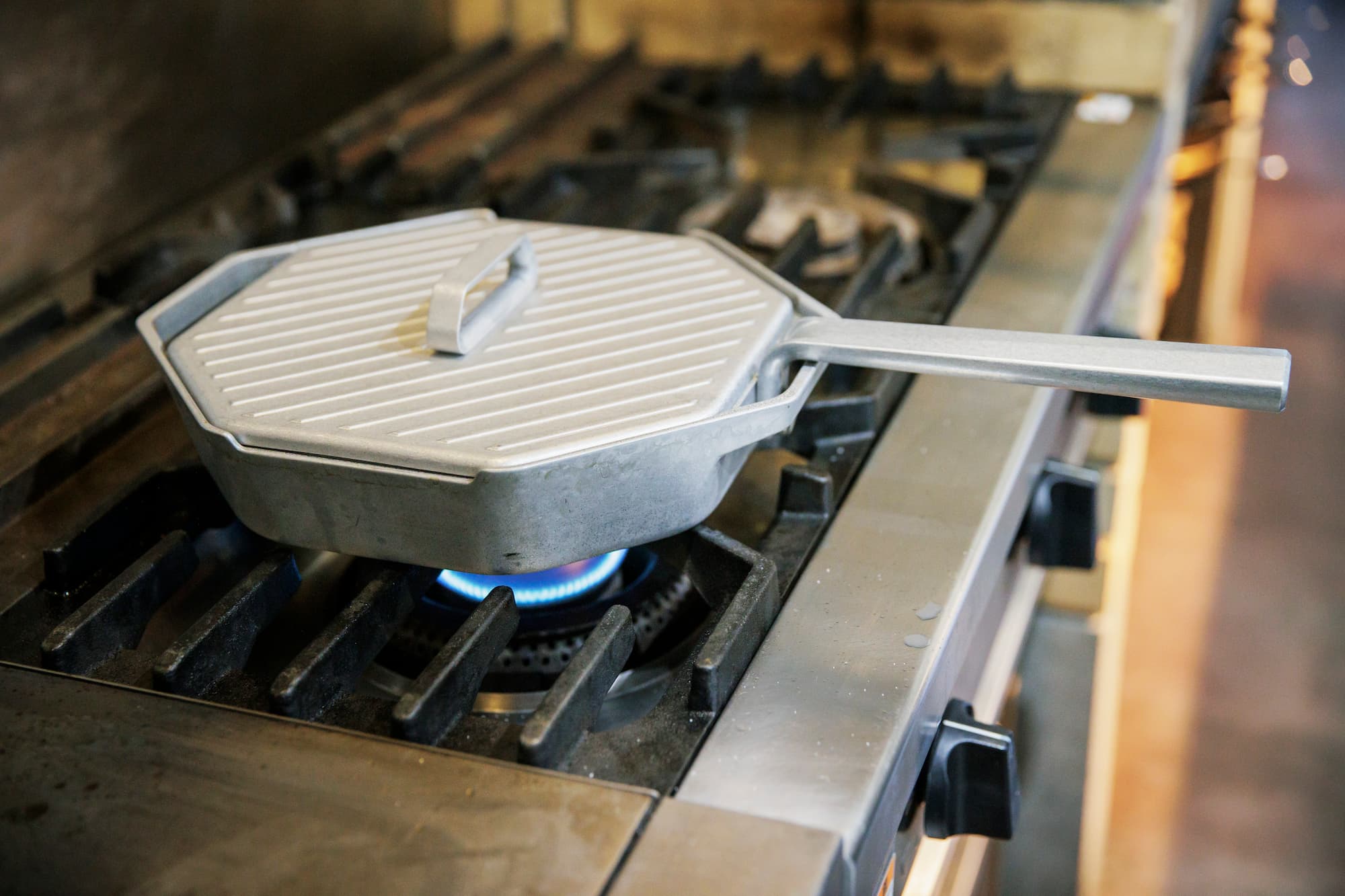
Part Two | The Possibilities of STEKA
How a Chef Thinks with a STEKA
Sear. Braise. Steam — all in one pan. The starting point for developing these recipes was how to translate STEKA's inherent characteristics into cooking. We spoke with Chef Horiuchi about the recipe structure, the appeal of uncoated steel, and what this tool might mean for home cooks.
— What was your approach when developing the recipes?
The first priority was to work with what the pan actually does. Once I understood its characteristics, I thought about when and how someone would naturally reach for it — at home, sure, but also outdoors. And I wanted each dish to be completable in this one pan.
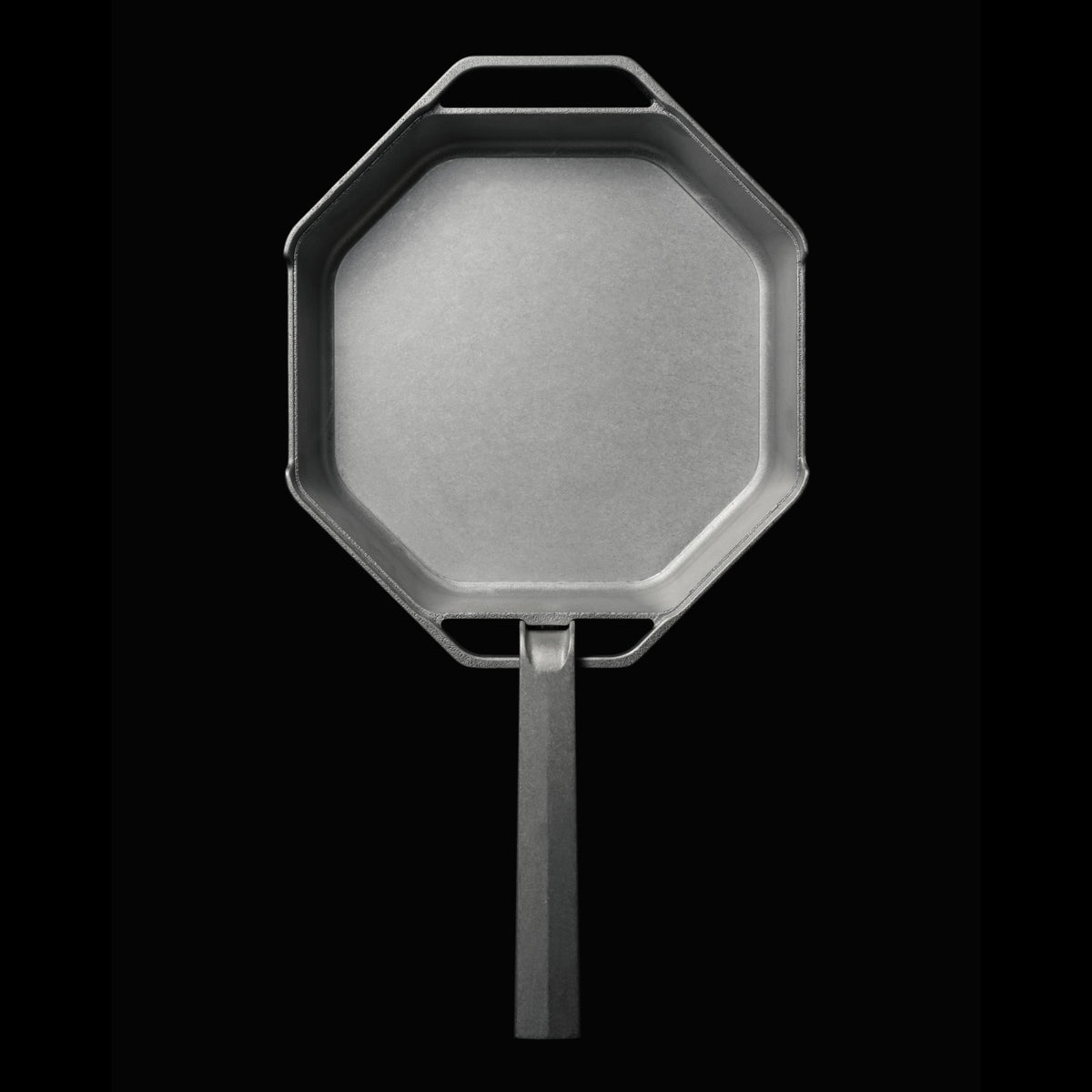
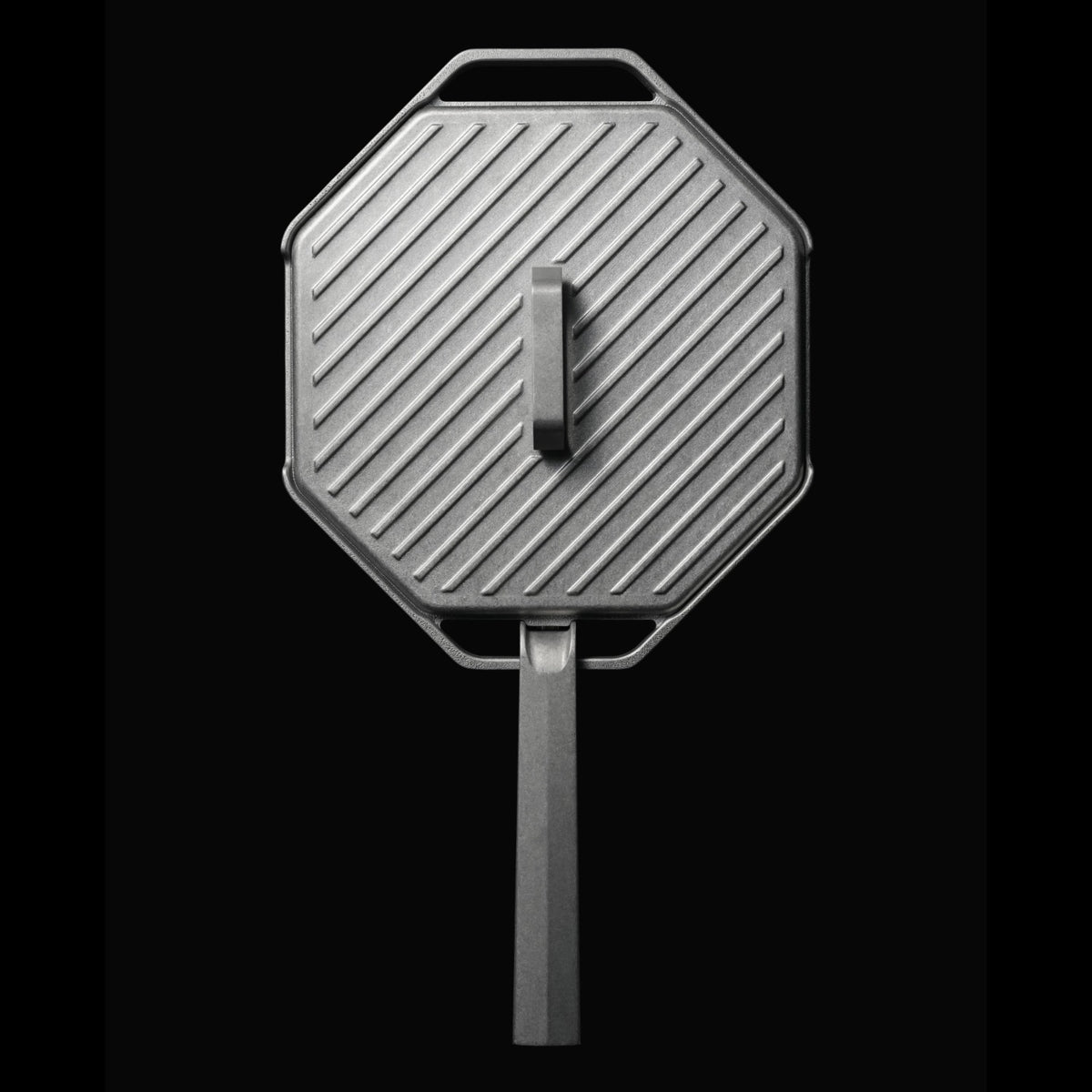
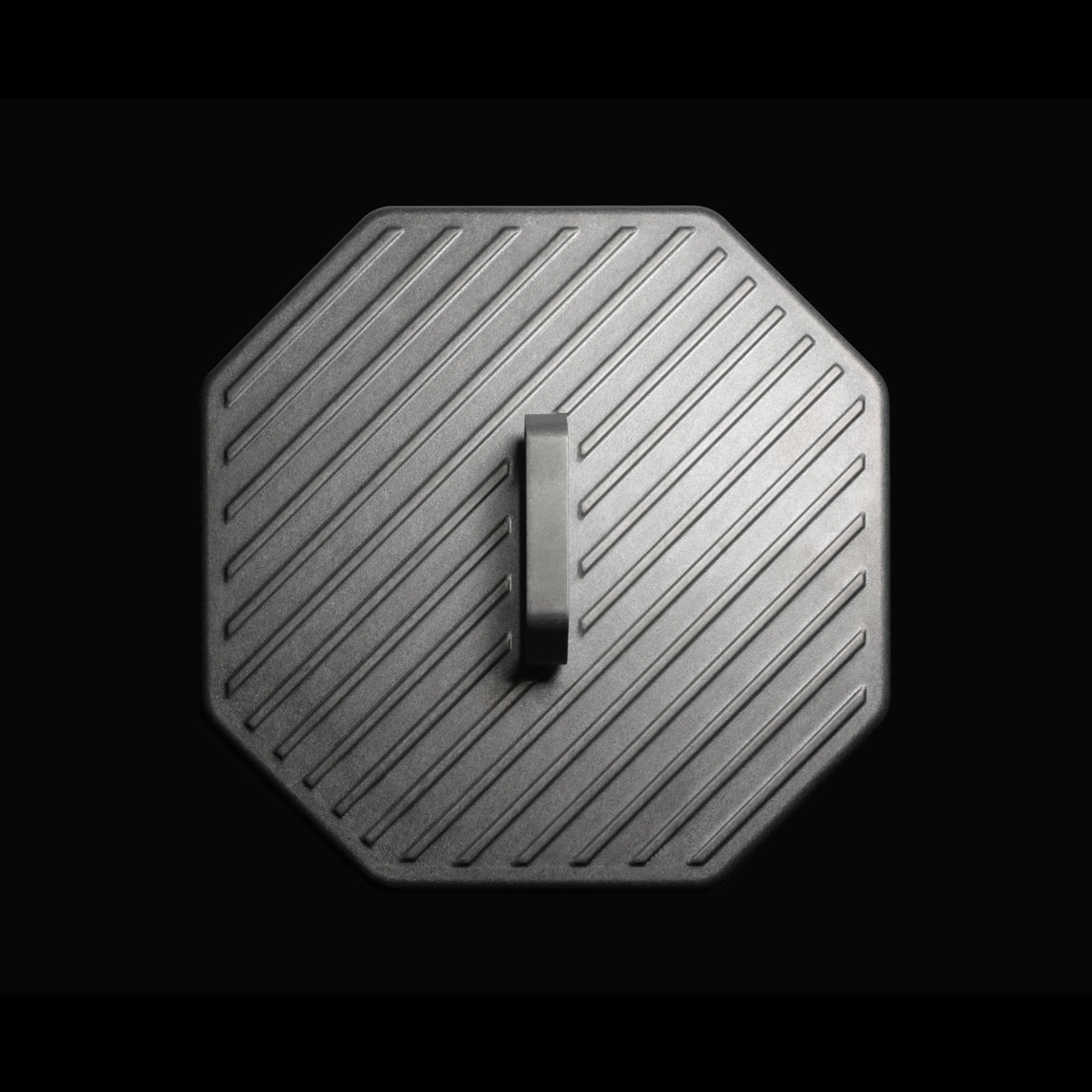
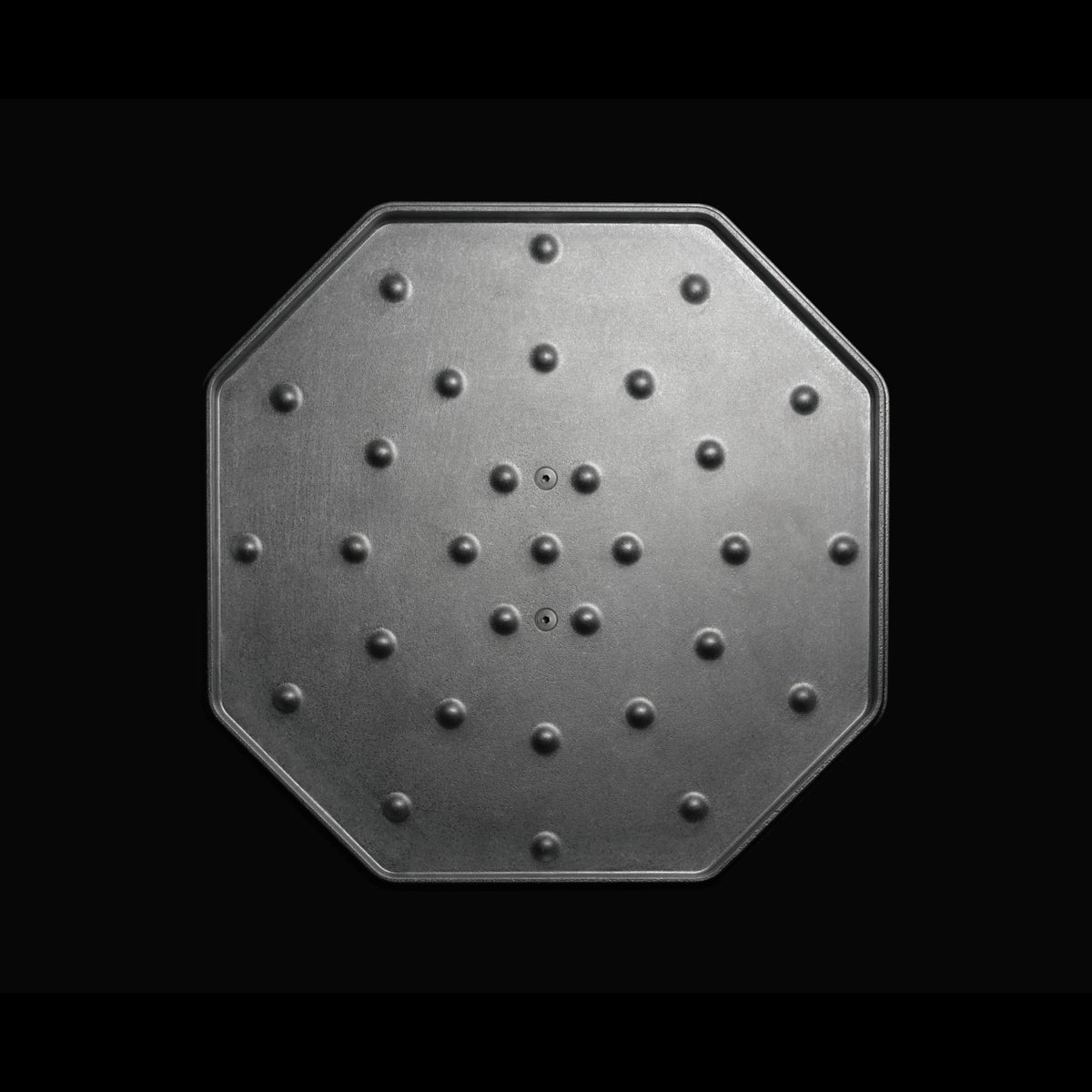
From there, I built a structure: one dish for the sauté and sear function; one for the oven, since the handle detaches and the pan goes right in — something that benefits from a long, slow braise; and one that uses the lid to steam. Each recipe reflects a specific way of using this pan.
— So the overall recipe set follows that same logic.
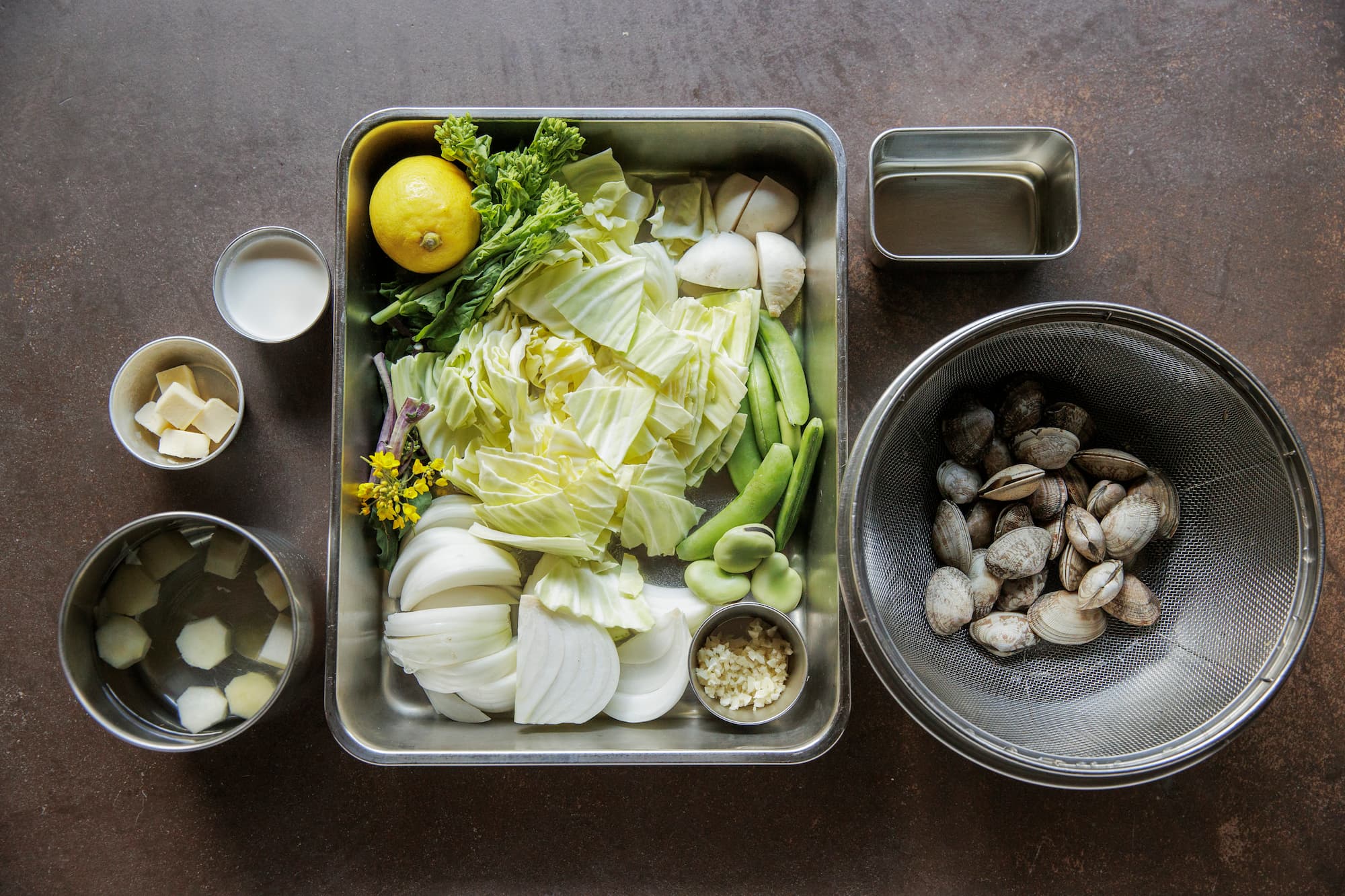
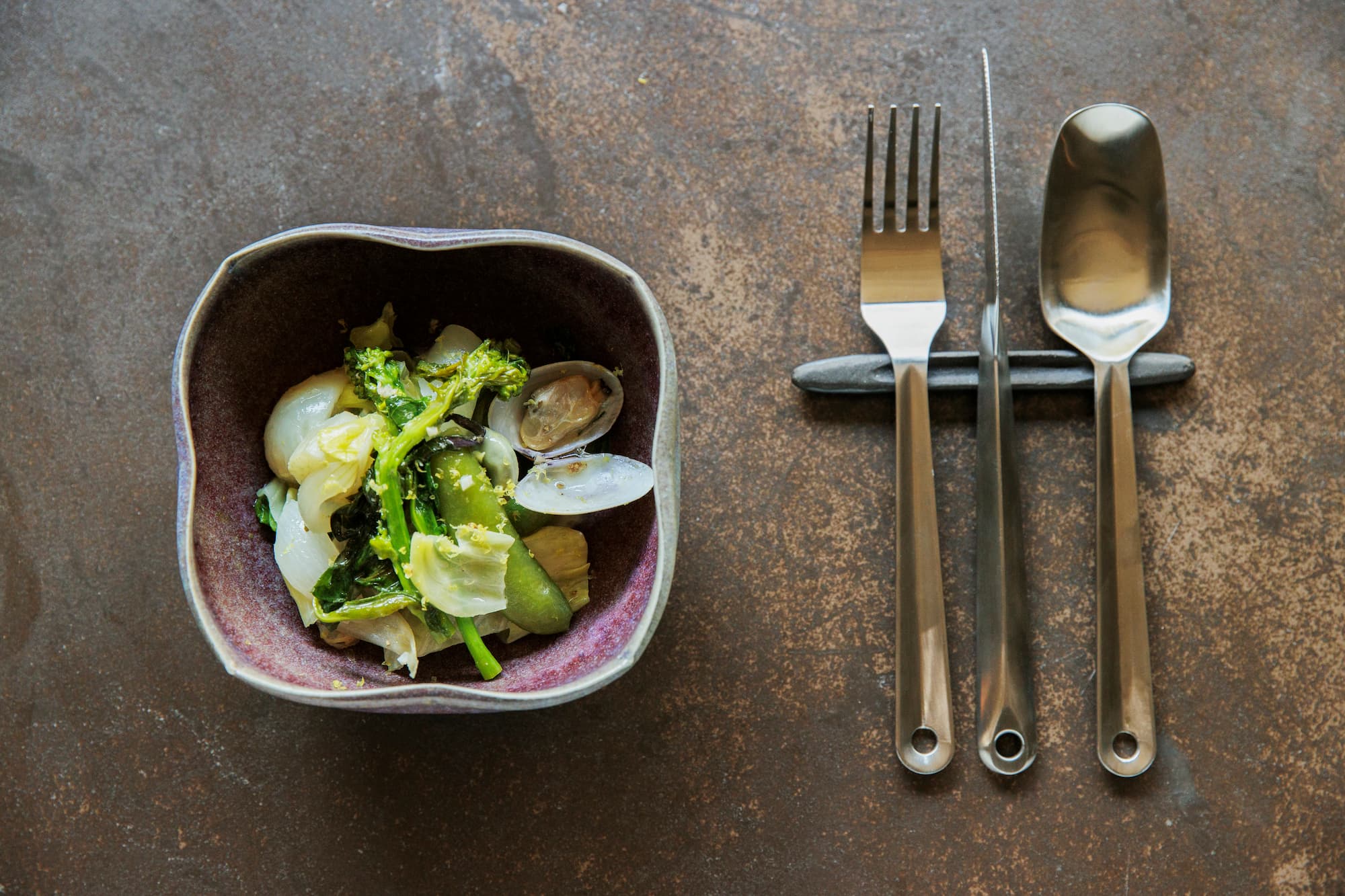
Exactly — sear, steam, braise. The spring vegetable étouffée is a steam dish; the choucroute sits somewhere between braising and steaming; the hunter-style chicken with mushrooms is a braise; and the trout mi-cuit is the sear. Each uses a different technique, and together they cover vegetables, two meat dishes, and one fish — something for everyone.
— What did you think about for the home-cook versions?
I almost left the clams out of the étouffée, honestly. But when you're cooking at home, clams bring a depth of flavor that makes the dish forgiving. The gap in skill shows without them — it can end up watery or under-seasoned. By including clams, the broth stays flavorful even if the technique is slightly off, and the umami compensates for dilution that would otherwise just taste thin.
The same thinking applies to cooking time and reduction: a dish designed for someone other than me should have a wide landing zone. A little too long on the heat, a little too reduced, slightly underdone — and it should still taste good. That's what I try to build into this kind of recipe.
— You mentioned the trout mi-cuit was the more challenging dish.
MOZAMBIQUE asked for one recipe that set a higher bar, so that's what I designed this to be. The trout requires managing temperature carefully. How dry the skin is, how thick the fillet — both affect how you cook it. With a thin fillet, you need high heat quickly to get the skin crisp before the flesh overcooks. With a thick fillet, too much heat and the skin burns while the inside stays raw.
The key is preheating both the pan and the oil properly, then once the skin goes in, coaxing a little oil along the edge of the skin with a spoon — gently managing the heat so the skin crisps without the flesh going too far.
The trickiest part: if the heat is too low, the moisture from the fish has nowhere to go, and the skin becomes soggy. There's a real technique required. The most reliable thing you can do is dry the skin overnight in the fridge — leave the skin exposed, wrap just the sides, and let it dry out slightly. That alone makes a dramatic difference in how it cooks. The most common failure point is the skin tearing away from the flesh the moment it hits the pan. If that happens, the skin stays behind and you lose everything. That's probably the most likely way this recipe goes wrong.
— The sauté pan form isn't especially familiar in Japan. What do you make of it?
In France, sauté pans are standard — searing meat, all kinds of preparations. It's less common here, I think. The frying pan is the default. But in classic French kitchens, you'd see sauté pans constantly. The form makes sense: you can sear in it, but you can also do light braises and other preparations a straight frying pan isn't suited for. The versatility is real.
— What does the uncoated surface offer that you can't get otherwise?
When you sear — the chicken, the trout — you get sucs building up in the pan. That's the French term for the caramelized residue from the Maillard reaction: proteins and a thin layer of flour adhering to the surface. It's not burned — it's flavor. You deglaze with water or white wine, and that fond dissolves into the braise. It's a depth of flavor a non-stick pan simply cannot produce.
It's similar across French and Spanish cooking: sear the meat deliberately, let the fond develop, lift it with liquid, and fold that into the sauce. The result is a different kind of richness — a toastedness, like the okoge on the bottom of a rice pot. That's what uncoated steel makes possible. For both the chicken and the trout in these recipes, I used that process intentionally — searing to build fond, then dissolving it back into the sauce. It's one of the real flavor contributions in both dishes.
— What was your overall impression of STEKA? How did it feel to cook with?
Visually, my first thought was: this is a beautiful object. It has a certain ruggedness, but also a refinement. It would work outdoors, but it would also look right on a shelf at home.
Cooking with it, it performed the way serious restaurant equipment does — solid, good heat retention, and lighter in the hand than it looks. I found myself reaching for it naturally for braises. The detachable handle is genuinely useful — into the oven without switching vessels. Cleanup is straightforward with a regular sponge; anything stubborn comes off easily with a nylon scrub pad.
— Finally, could you tell us what you look for when choosing tools, and whether you have any you've used for a long time?
When choosing tools, I focus on ease of use and durability. If you go for something cheap and not built to last, you end up replacing it more often, which actually costs more in the long run. That's why I choose things I can use for a long time. Some of my knives I've been using for as long as eight years.